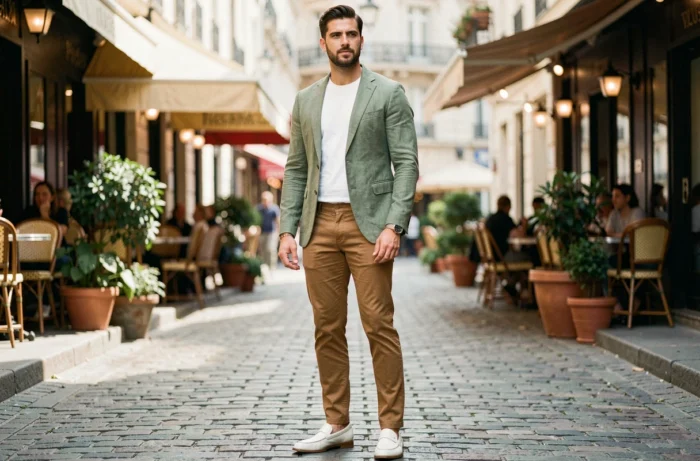
The autumn-winter 2026-2027 fashion shows have set their milestones, and the men’s wardrobe is reconfiguring around a few precise axes. Ubiquitous leather, dark palettes enhanced with touches of wine red, silhouettes that oscillate between rigor and relaxation: the men’s fashion trends of this season are not just a list of items to buy. They also reflect a regulatory shift in Europe that changes how brands produce, store, and resell.
European Regulation and Men’s Fashion: What Changes in 2026
Since July 19, 2026, large fashion companies operating in the EU are no longer allowed to destroy their unsold textiles, except for exceptions related to safety or counterfeiting. The Ecodesign for Sustainable Products Regulation (ESPR) now mandates resale at reduced prices, donation, repair, or refurbishment.
The result for the men’s wardrobe is tangible. “Outlet,” “archive,” and “pre-owned” offerings are multiplying, making pieces that are usually out of budget accessible: structured coats, wool suits, premium sneakers. For men who want to adopt trends without paying full price, second-hand and clearance channels are becoming a credible option, driven by regulatory pressure rather than just marketing.
At the same time, since January 1, 2025, all member states are organizing a mandatory separate collection of textiles. This system feeds sorting and reuse processes that promote durable basics, those that withstand multiple cycles of wear and washing. The thin t-shirt discarded after one season is losing ground to the thick-knit polo or flannel overshirt, designed to last.
Men’s fashion trends are also explored on specialized platforms, a useful resource: https://mister-tendance.fr/ which compiles current styles and piece pairing advice.
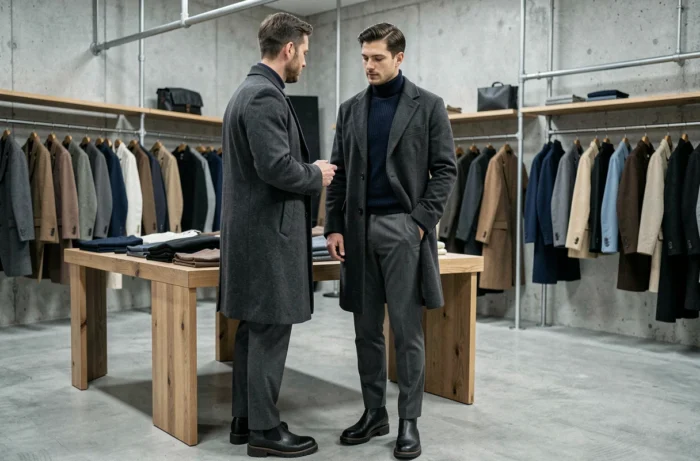
Leather and Heavy Textures: The Backbone of Autumn-Winter Style
Leather dominates the offerings from brands this season, but not in just any form. Leather blazers are gradually replacing the classic biker jacket. The cut is more fitted, the finishes more understated, and the preferred tones are deep black, dark green, and burgundy.
Faux fur is also making a comeback in men’s wardrobes, worn as a removable collar, as visible lining, or as a short jacket. Several houses have integrated it into their autumn-winter 2026-2027 shows, often paired with raw denim or pleated trousers.
- The black or burgundy leather blazer is worn over a fine turtleneck for a structured look without a tie
- The thick flannel or blended wool overshirt works as an intermediate layer, either alone or under a coat
- Oversized gloves, spotted on several runways, add volume to streamlined silhouettes and extend the line of the sleeves
- The faux fur in a collar or short jacket adds texture without weighing down the silhouette
The common thread among these pieces: they rely on materials that have weight, in the literal sense. Lightweight fabrics and flowing cuts are giving way to garments that “fall” and structure the silhouette.
Men’s Color Palette 2026: Beyond Black and Navy
Black remains a foundation. Navy blue too. Nothing new. What changes is the marked emergence of wine tones, deep burgundy, and forest green in the key pieces of the wardrobe, not just in accessories.
Natural neutrals (stone beige, camel, warm gray) represent the other side of the autumn palette. Worn as a total look, they give a sober appearance that contrasts with the bright colors seen in women’s fashion this season. Bordeaux and lime green are establishing themselves as global key colors, but for men, lime green remains confined to sneakers or small accessories.
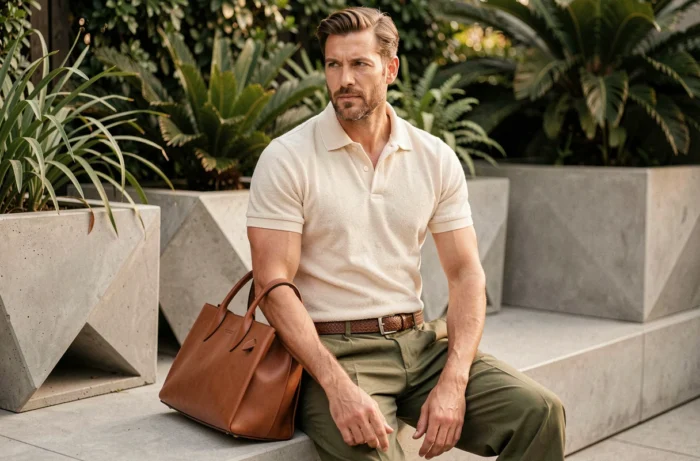
Burgundy, on the other hand, is making its way into structuring pieces: two-piece suits, straight coats, twisted knit sweaters. It is probably the easiest color to integrate for those looking to step away from black without taking a style risk.
Cuts and Silhouettes: The Classic Suit Regains Ground
Oversized silhouettes are not disappearing, but the pendulum is swinging back towards more fitted cuts on the upper body. The sport coat, worn with jeans or chinos, is regaining its place in the daily wardrobe. Shoulders are slightly defined, the waist is hinted at, without falling into excessive tailoring.
The modern suit is distinguished from corporate suits by a few details: slightly textured fabric (flannel, herringbone), straight cut without excessive pleats, and above all, the absence of a tie. The checkered scarf, simply tied or tucked into the breast pocket, appears as a recurring alternative in seasonal looks.
Jacquard and Nordic patterns are also making a comeback, mainly on knits. Sweaters, vests, and scarves adopt geometric patterns or those inspired by Scandinavian knitting, often in natural tones.
- The flannel suit in gray or navy is worn without a tie, with chunky-soled boots
- The sport coat in tweed or corduroy works from the office to the weekend
- Jacquard patterns on knits add personality without overwhelming the look
White jeans, spotted in several collections, represent a bolder statement. They work better when paired with dark pieces (black blazer, navy sweater) that anchor them in a coherent palette.
This season’s men’s fashion trends ultimately boil down to a fairly clear principle: denser materials, refocused cuts, and a palette that dares to use color without excess. The European ban on the destruction of unsold goods is also pushing brands to offer more pieces through short circuits or second-hand, making these styles more accessible than one might think.