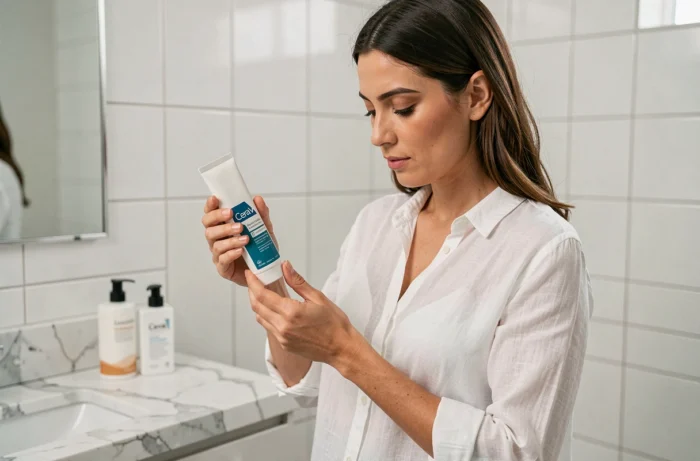
CeraVe is among the most visible skincare brands in pharmacies and on social media. Its affiliation with the L’Oréal group is often the subject of online discussions, with categorical claims, rumors, and confusions. However, the capital link between the two entities is well-documented and public.
CeraVe’s Capital Structure: What the L’Oréal Group Owns
CeraVe was founded in the United States as a dermocosmetic brand developed with dermatologists. The brand was acquired by L’Oréal, which integrated it into its active cosmetics division, alongside other brands like La Roche-Posay, Vichy, and SkinCeuticals.
CeraVe indeed belongs to L’Oréal, in the legal and operational sense of the term. It is neither a commercial partnership, nor a brand license, nor mere distribution. L’Oréal owns CeraVe and drives its development, production, and global strategy.
Questions often arise from the fact that CeraVe maintains a distinct visual identity, an accessible pricing position, and communication focused on dermatological recommendations. This brand autonomy is common in large cosmetic groups, where each brand targets a specific segment without displaying the parent group’s name on the packaging. For info on Maestro Business and Tomirvibum Ltd regarding this affiliation, the lineage between CeraVe and L’Oréal is also detailed there.
Acquisition of CeraVe by L’Oréal: Timeline and Industrial Logic
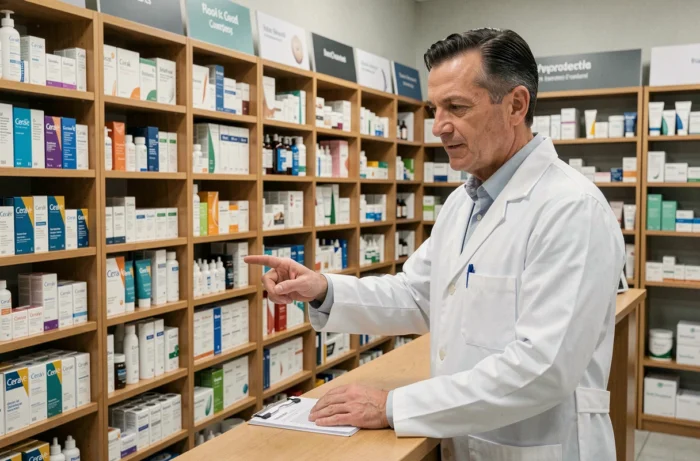
Before its acquisition by L’Oréal, CeraVe was owned by Valeant Pharmaceuticals (now Bausch Health). The brand was then positioned in the North American market, primarily distributed in pharmacies and recommended by healthcare professionals.
L’Oréal acquired CeraVe as part of a package that also included AcneFree and Ambi, two other skincare brands. The French group’s stated goal was to strengthen its active cosmetics division in the American market, where La Roche-Posay and Vichy held a less dominant position than in Europe.
Since this integration, CeraVe has experienced rapid international expansion. The brand is now sold in several dozen countries, in pharmacies, specialized retail, and on online shopping websites. The internationalization of CeraVe is directly linked to L’Oréal’s logistical and marketing capabilities.
Benzene Controversy and Acne Products: What U.S. Justice Says
Part of the online distrust surrounding CeraVe stems from a controversy that occurred in the United States, specifically concerning certain products containing benzoyl peroxide, an active ingredient used against acne. This controversy does not concern the entire CeraVe range.
In 2024, the independent laboratory Valisure raised concerns about the possible formation of benzene from benzoyl peroxide, particularly when products are exposed to high temperatures. Class action lawsuits have been filed against several manufacturers, including L’Oréal for its CeraVe and La Roche-Posay brands.
Judicial Decision and Actual Scope
A U.S. federal court dismissed these complaints. The reason given was procedural: the requests for additional warnings clashed with federal over-the-counter drug labeling rules. The judge found that federal regulations preempted the obligations invoked by the plaintiffs at the state level.
This dismissal does not constitute a thorough examination of the safety of all CeraVe products. It also does not equate to a blanket approval of the brand by the judiciary. The FDA, for its part, indicated after its own tests that:
- The vast majority of benzoyl peroxide-based products tested showed no detectable benzene or contained only low levels
- The cancer risk associated with the levels found in the recalled products was deemed very low by the agency
- This assessment concerns a specific category of anti-acne products, not cleansers, moisturizers, or CeraVe serums without benzoyl peroxide
The controversy concerns a pharmaceutical active ingredient, not the CeraVe brand as a whole. Confusing the two is akin to conflating a common ingredient among several manufacturers with a failure specific to a single brand.
CeraVe Counterfeits and Online Distribution: A Real but Distinct Risk
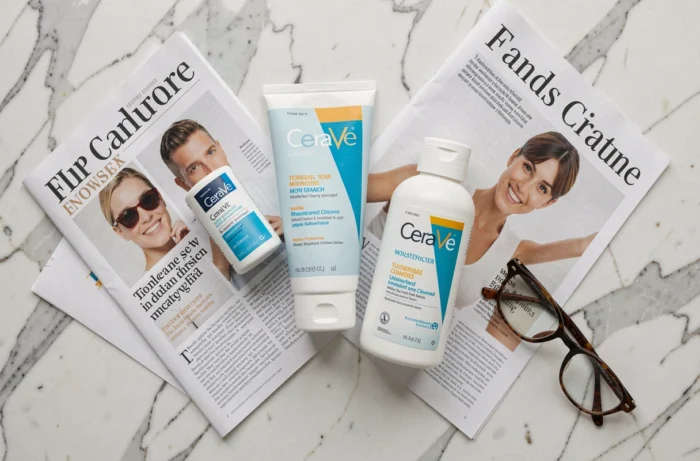
Another factor fueling doubts is the circulation of counterfeit CeraVe products on certain online sales platforms. CeraVe Canada even publishes a page dedicated to product authenticity, listing its authorized retailers and warning against unverified third-party sellers.
This issue is not unique to CeraVe. All well-known skincare brands are affected by counterfeiting on marketplaces. The relevant question for consumers is not “Is CeraVe reliable?” but rather “Is the seller I am buying from authorized?”.
Some guidelines to verify the authenticity of a CeraVe product:
- Buying in a physical pharmacy or on the brand’s official website eliminates almost all risk of counterfeiting
- On online shopping websites, check that the seller is identified as an authorized distributor by CeraVe or L’Oréal
- Differences in packaging, texture, or smell compared to a product purchased in a pharmacy may signal a counterfeit
The reliability of a CeraVe product depends on the distribution channel, not the brand itself.
What Belonging to L’Oréal Changes (or Does Not Change) for the Consumer
The fact that CeraVe is owned by L’Oréal does not alter the composition of the products. The formulations remain developed with dermatologists, and the ceramides, hyaluronic acid, and niacinamide that characterize the range are present regardless of the shareholder.
Belonging to a large group has consequences on other levels: production capacity, marketing budget, pricing accessibility maintained on a large scale. CeraVe benefits from L’Oréal’s logistical power without having changed its dermocosmetic positioning.
Legitimate criticisms of L’Oréal regarding issues such as personal data, privacy, or the group’s environmental practices may lead some consumers to reconsider their purchases. These are individual choices that fall under consumer ethics, not the intrinsic quality of skincare products.
CeraVe belongs to L’Oréal, the benzene controversy concerns a specific active ingredient and not the entire range, and doubts about authenticity can be resolved by choosing the point of sale. Three distinct questions that deserve separate answers.