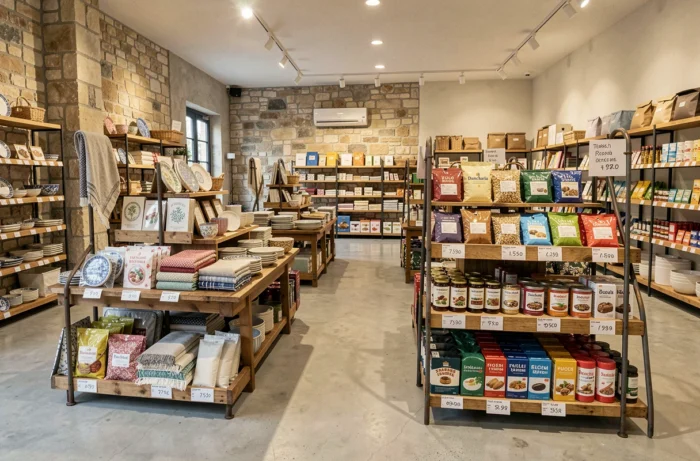
Dancharia, a small border hamlet on the Spanish side just a few minutes from Espelette, has seen its commercial offering expand with the opening of a redesigned space at the Landibar site. The complex is no longer limited to the classic alcohol and tobacco aisles: butchery, perfumery, fashion, and fresh products now occupy a space organized as a shopping gallery.
The question is not so much what to buy, but whether the trip remains worthwhile once the journey, comparable French prices, and customs constraints are taken into account.
Real cost of traveling to Dancharia: the calculation no one makes
Most guides list the products to bring back without ever factoring in the cost of the trip. For a visitor coming from Bayonne or Biarritz, the distance remains short. For someone driving from Bordeaux or Pau, fuel, possible tolls, and time spent eat into a significant portion of the expected savings.
The price difference on alcohol or charcuterie may seem attractive on the shelf, but it must be related to the volume that can actually be transported for personal use. Bringing back a few bottles of wine and a ham does not generate the same savings as filling an entire trunk, which customs thresholds do not allow without justification anyway.
Since the new store in Dancharia, the offering has expanded to categories such as fashion or cosmetics, which can justify the trip beyond just the grocery basket. However, in these segments, French online brands or those in commercial areas are displaying increasingly competitive prices thanks to recurring promotions.
Customs thresholds for alcohol and tobacco: what the allowances really permit
The indicative thresholds for returning from Spain to France are often presented as acquired rights. This is not the case. These allowances are meant to assess personal use, not to build up a stock. French customs can request proof at any time, and the absence of a purchase receipt complicates the situation in case of a check.
Alcohol: the benchmarks to know
For alcohol, the indicative thresholds coming from Spain are around 10 liters of spirits, 90 liters of wine, and 110 liters of beer. These volumes do not mean they can be transported without question. A customs check evaluates personal use on a case-by-case basis, taking into account the overall context of the traveler.
Tobacco: the ambiguity around cartridges
Contrary to popular belief, there is no fixed legal ceiling comparable to a limit of four cartridges for tobacco purchased in Spain. The benchmark of 800 cigarettes remains an indicative threshold. Exceeding this volume without being able to prove strictly personal use exposes one to seizure and a fine.
Travelers under 17 years old do not benefit from any allowance on tobacco and alcoholic beverages, a restriction confirmed by the Agencia Tributaria in its update of September 29, 2026.
Fresh products and Basque terroir: the aisles where price differences persist
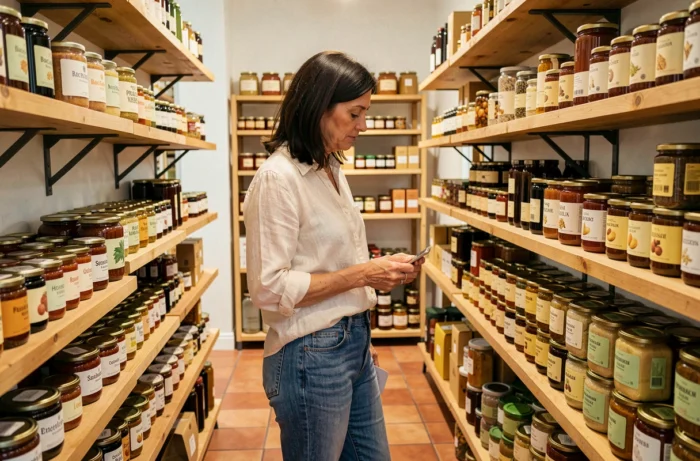
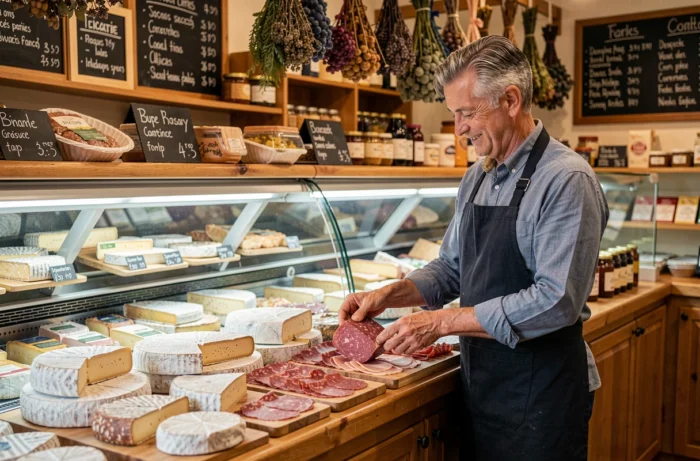
For meat, Iberian charcuterie, and certain sheep cheeses, the price gap with those in France remains tangible. The butchery in the new store offers pieces of Spanish meat and artisanal charcuterie that are hard to find at the same price on the French side, even in large supermarkets.
The weak point remains preservation. Fresh products do not withstand a prolonged return trip well, especially in summer. Prioritizing these aisles during the visit, before moving on to bottles or clothing, limits the risks of breaking the cold chain.
- Iberian charcuterie (ham, artisanal chorizo): references rarely available in France at equivalent prices, with a specific drying expertise
- Basque and Navarre sheep cheeses: a wider range than in classic French cheese shops, with varied affinage
- Piment d’Espelette and local condiments: the price difference is smaller here, but the diversity of formats can justify the purchase
Cosmetics, fashion, and everyday products: savings to be put into perspective
The perfumery and cosmetics section attracts many visitors. The price gap on major brands was significant a few years ago, but online promotions and in French parapharmacies have reduced this advantage. For some products, the difference is limited to a few euros per item.
The fashion section operates on a model of Spanish brands or clearance sales. The interest heavily depends on arrivals and the season. Field returns vary on this point: some visitors find pieces at very low prices, while others leave empty-handed.
For everyday products (laundry detergent, hygiene, common food), Spanish prices are not systematically lower than French prices. Large French supermarkets often practice loss leader pricing on these categories, sometimes completely negating the border price difference.
Purchase receipts and customs checks: a reflex to adopt
Keeping the receipts for each purchase is the best protection in case of a check. These proofs allow one to demonstrate that the products were bought by the traveler, for personal use, with Spanish taxes paid.
- Keep all receipts until returning home, including for small amounts
- Separate purchases by category (alcohol, tobacco, food) to facilitate any potential checks
- Ensure that the quantities transported remain consistent with personal use for a household
The absence of a receipt is not an offense in itself, but it significantly complicates the traveler’s defense if customs believes that the transported volumes exceed personal use.
The new store in Dancharia offers a more structured and diversified offering than the old ventas. The real savings focus on fresh products, Iberian charcuterie, and, to a lesser extent, alcohol.
For the rest, the price advantage depends on the purchasing profile and the real cost of the trip. An informed visitor, equipped with their receipts and aware of customs thresholds, makes the most of the trip. A compulsive buyer who fills their trunk without calculation risks finding out on the way back that the operation was not so advantageous.