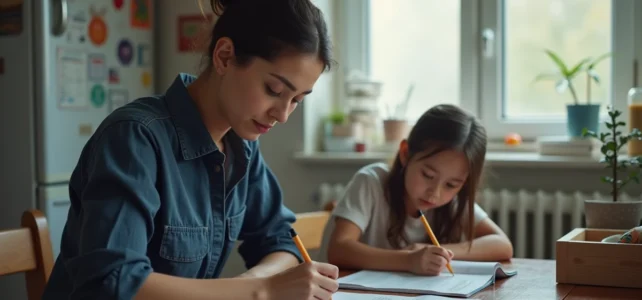
The terms “single mom” and “isolated mother” are often used as synonyms. In conversations, on social media, or in administrative forms, the nuance goes unnoticed. However, these two expressions describe different realities, with concrete consequences on daily life, accessible support, and how these women organize their family life.
Relationship status and family situation: two distinct concepts
A single mom is a woman who is not in a relationship. She may live alone with her children, but she can also benefit from a strong family network, an ex-partner involved in custody, or friends who are present in her daily life. The word “single” refers to a relationship status, not a degree of isolation.
An isolated mother, on the other hand, is in a situation where she alone bears the daily responsibility for her children. She may be divorced, widowed, or separated. The father may be absent, not paying child support, or not exercising his visitation rights. Isolation is measured here by the absence of concrete support, whether emotional, logistical, or financial.
Understanding the daily life of a single mom helps to grasp why these two terms do not cover the same reality, even if the paths sometimes intersect.
Have you ever noticed that some solo moms seem well surrounded while others seem to carry the weight of the world? This difference does not stem from character. It often comes from the support structure surrounding (or not) the parent.
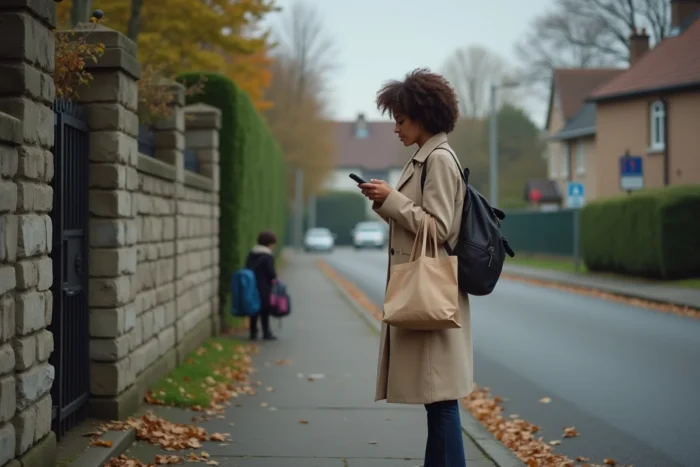
Isolated mother and social assistance: what the administrative definition changes
The distinction is not just a matter of vocabulary. It has a direct impact on access to social and tax assistance. Organizations like CAF use the term “isolated parent” to determine eligibility for certain benefits.
The family support allowance (ASF) illustrates this logic well. It is paid to the parent who raises a child alone without receiving child support, or whose support is less than the amount of the ASF. It is not being single that grants the right, but the concrete situation of single parenthood without financial support from the other parent.
Another example: the increase for isolated parents in the calculation of RSA. It applies when the parent lives alone with their children. A single mother who shares her home with a new partner loses this increase, even if that partner does not contribute to the costs related to the children.
Filling out an administrative form: common pitfalls
When a mother fills out a social or tax form, the way she declares her situation changes the outcome. Declaring herself as “single” does not have the same effect as checking “isolated parent.” The consequences affect:
- The amount of RSA, which includes a specific increase for parents solely responsible for at least one child
- Access to ASF, conditioned on the actual absence of financial support from the second parent
- The number of tax shares, as the status of isolated parent allows for an additional half-share under certain conditions
A mistake in the checked box can lead to an overpayment to be reimbursed several months later. This is not a detail.
Daily life of solo moms: isolation is not always visible
Beyond the forms, the difference is felt in everyday life. A single mom whose ex-partner takes the children every other weekend has time for herself. She can work, rest, or see friends. Shared custody radically changes the organization of daily life.
An isolated mother without family support does not have this breathing space. She is the one managing school, homework, meals, medical appointments, and unforeseen events. When the child is sick, she is the one who misses work. When the washing machine breaks down, she is the one who finds a solution.
Home support, an underutilized lever
Recent parliamentary debates highlight home support for parents as a way to prevent situations of family distress. The Senate recommends amplifying the interventions of parenting support services to act before vulnerabilities worsen.
This approach shifts the perspective. We are no longer just talking about financial assistance, but about regular human presence with families in difficulty. For an isolated mother who has no one to call in case of hardship, a weekly visit from a social worker or an association can make the difference between coping and breaking down.

Single mom in a blended family: a gray area
Some women define themselves as single moms even though they have a new partner. Why? Because this partner does not play the role of a parent to their children. He does not take them to school, does not finance their activities, does not participate in educational decisions.
Administratively, this situation poses a problem. Living under the same roof as a partner removes the status of isolated parent, even if this partner does not assume any responsibilities related to the children. The mother then loses certain benefits, without her actual burden decreasing.
This is one of the most frustrating gray areas of the system. The lived reality and the administrative category do not coincide. Many mothers hesitate to formalize a new relationship for fear of losing benefits they need to support their children.
What this changes for the children
Children also perceive the difference. A child whose father remains present (even separated) has two parental references. A child whose father is completely absent builds their daily life around a single adult reference. The mental and emotional burden on the mother in this second case is of a different order.
Confusing the two situations amounts to ignoring what these families experience day to day. The vocabulary we choose to describe these realities is not trivial: it conditions social perception, access to rights, and how these women perceive themselves.