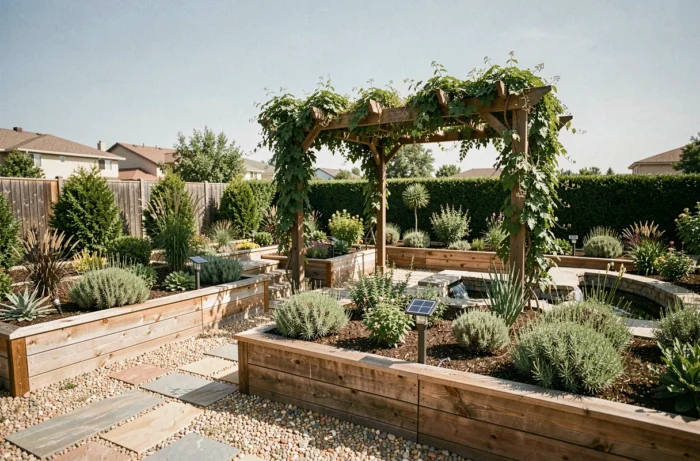
A dry plot in summer, a clay soil that retains water in winter, a yard of less than 50 m² wedged between two walls: each garden imposes its constraints before offering its possibilities. Designing your outdoor space is not just about choosing pretty plants. It starts with soil, exposure, and daily use to build a space that lasts, even when watering becomes limited or prohibited.
1. Replace the lawn with living mulch in a small garden
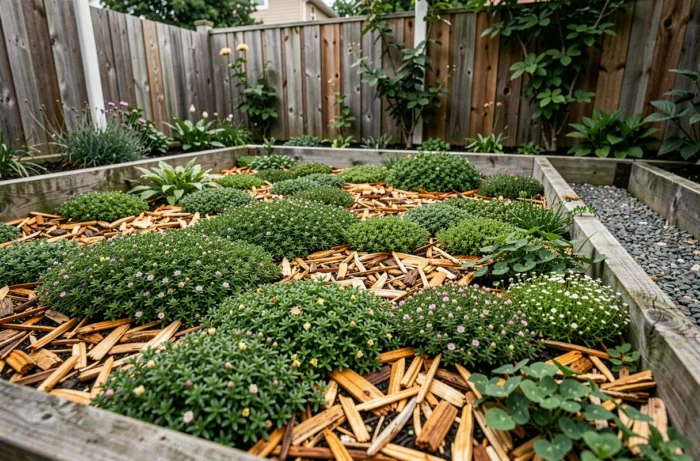
In a space of less than 50 m², traditional grass poses a concrete problem: it requires regular watering, frequent mowing, and turns yellow at the first prolonged heatwave. Landscapers recommend replacing it with a combination of mulch, ground covers, and drought-tolerant perennials.
The principle is simple. Cover the bare soil with organic or mineral mulch, then install ground-covering plants (thymus serpyllum, sedum, phyla nodiflora) that gradually colonize the space. The result requires very little maintenance once the plants are rooted.
This approach also makes the garden more compatible with water restrictions. In drought situations, watering lawns may be prohibited, while a covered soil and established perennials can survive without regular input. When looking for ideas for landscaping your garden, it is often this type of sustainable solution that makes a long-term difference.
2. Install permeable mineral surfaces instead of concrete
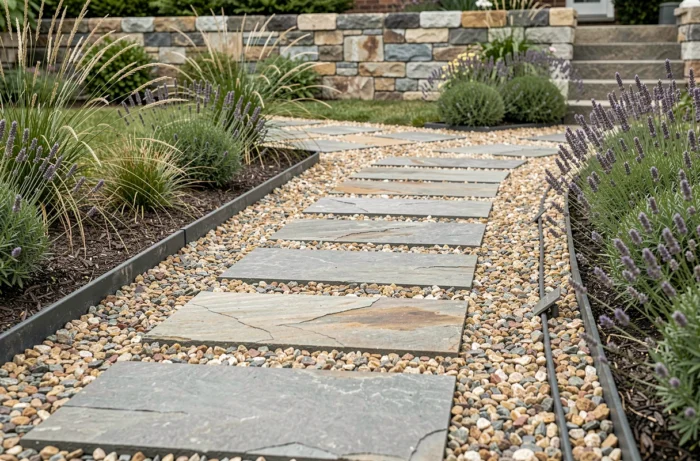
Concrete poured terraces, mortar-jointed slabs: these classic choices seal the soil and worsen runoff during heavy rains. De-sealing has become a key landscaping criterion, even for individuals.
Stabilized gravel, grassed cellular slabs, or natural stone laid on a sand bed allow water to infiltrate. You maintain a walkable surface for a table, chairs, or passage without turning the garden into an impermeable zone.
The bonus: these materials fit into very different styles, from contemporary to rustic, depending on the chosen grain size and color.
3. Plant drought- and frost-resistant Mediterranean species
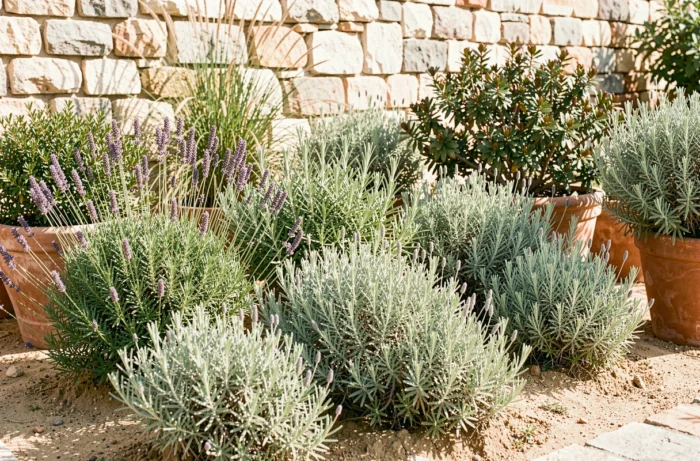
Feedback from Terra Botanica shows that after a watering phase aimed at promoting rooting, some Mediterranean plantings thrive without regular water inputs. Lavender, rosemary, cistus, gaura, perovskia: these plants tolerate heat and, for the most part, withstand moderate frosts.
Compose a bed by playing with heights and staggered bloom times. A perovskia at the back of the bed, lavenders in the middle, thyme at the edge. The result remains structured even in the height of summer, when other more traditional beds suffer.
Be sure to check the hardiness of each variety according to the climatic zone. Feedback varies on this point, especially for cistus in continental climates.
4. Create levels with dry stone walls
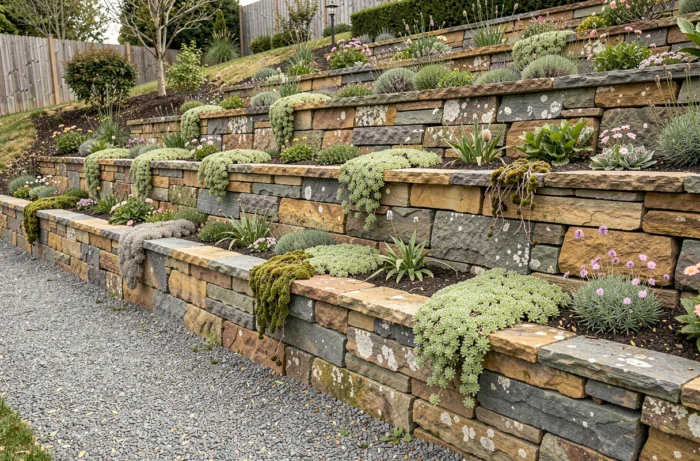
A gently sloping plot or a monotonous flat garden gains character as soon as elevation changes are introduced. Dry stone walls (without mortar) allow for the creation of terraces, retain soil, and provide micro-habitats for insects and lizards.
Dry stone is a local material in many French regions. It is sometimes recovered from the site itself during excavation. Each gap between the stones becomes a refuge for the biodiversity of the garden, contributing to the return of pollinators.
5. Integrate a simple water feature: basin or drinking trough
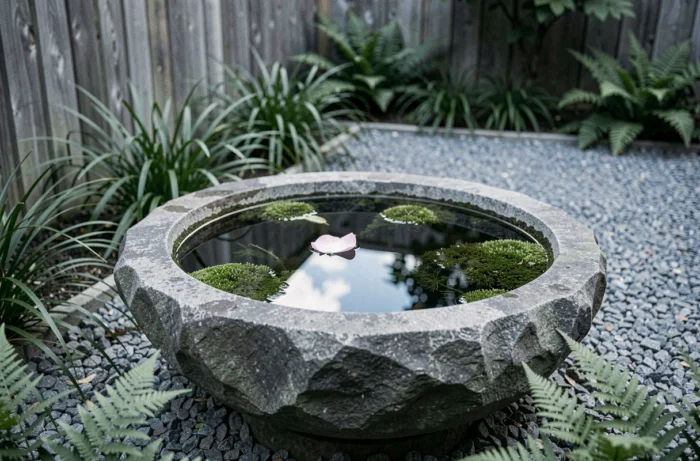
No need for a pond several square meters in size to enjoy the presence of water. A stone basin, an old cast iron trough, or a simple dish placed on a wall is enough to attract birds and create a visual focal point.
A water feature consumes almost nothing when it remains small. It can be filled by hand or with collected rainwater. During restriction periods, this solution remains permitted, unlike a pond fed by the mains.
6. Install low-consumption solar lighting along pathways
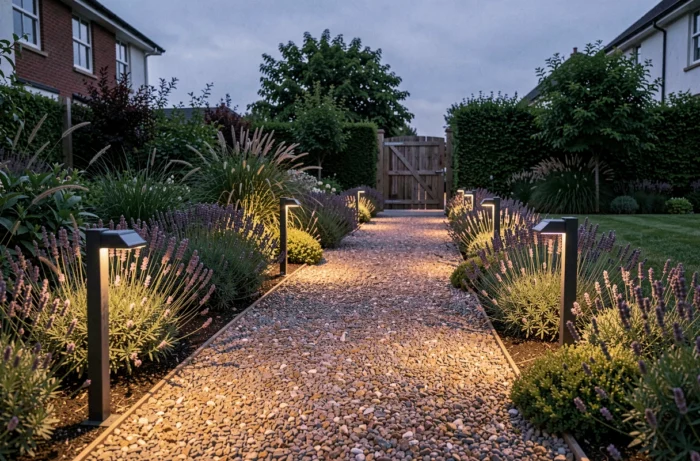
Outdoor lighting transforms the use of the garden as soon as night falls. Solar LED posts placed along a path or at the foot of a bed create discreet marking without wiring or electrical consumption.
Powerful floodlights that dazzle and disturb nocturnal wildlife should be avoided. The goal is to mark pathways and highlight volumes, not to illuminate the garden like a parking lot. Three to five light points are sufficient for most city gardens.
7. Create a raised wooden vegetable garden
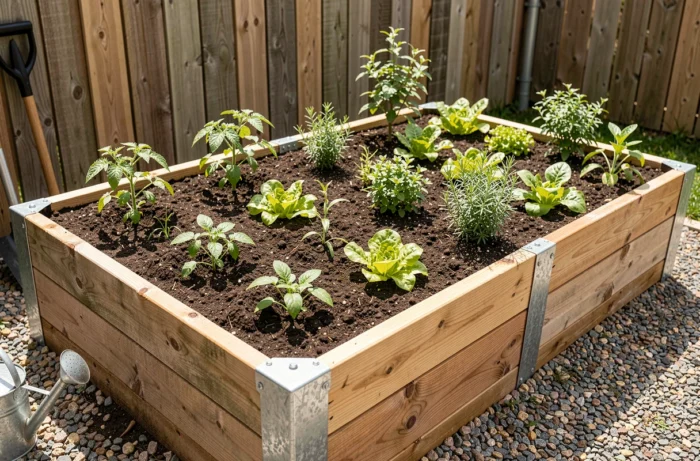
The raised vegetable bed solves two common problems: poor or polluted soil and back pain. Fill the bed with a mix of potting soil and compost, ensuring a fertile substrate from the first season.
Wood remains the most accessible material for this type of construction. Choose a moisture-resistant species (Douglas fir, larch, chestnut) or class 4 treated wood. A modestly sized bed produces enough tomatoes, herbs, and salads for regular use.
8. Leave a controlled wildflower area in the garden
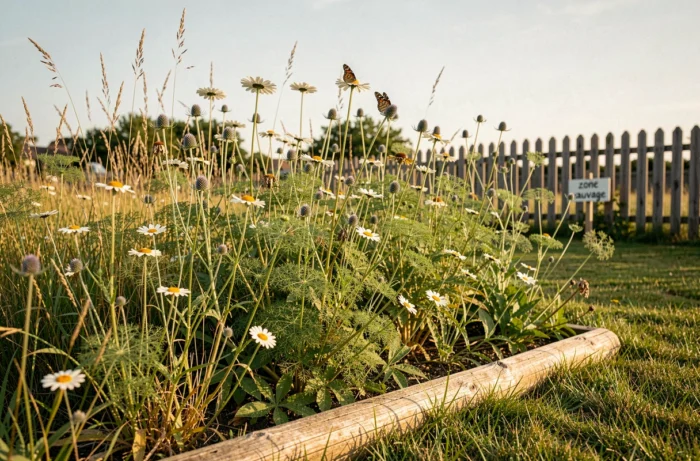
An overly tidy garden is a dead garden for pollinators. Leaving a corner (even a small one) with tall grasses, nettles, and wildflowers provides food and habitat for bees, butterflies, and beneficial insects.
Define this area with a clear border or differentiated mowing to show that it is a choice, not abandonment. The contrast between a maintained area and a wild area adds depth to the garden. This approach costs nothing and reduces overall maintenance time.
9. Structure the space with a pergola or green awning
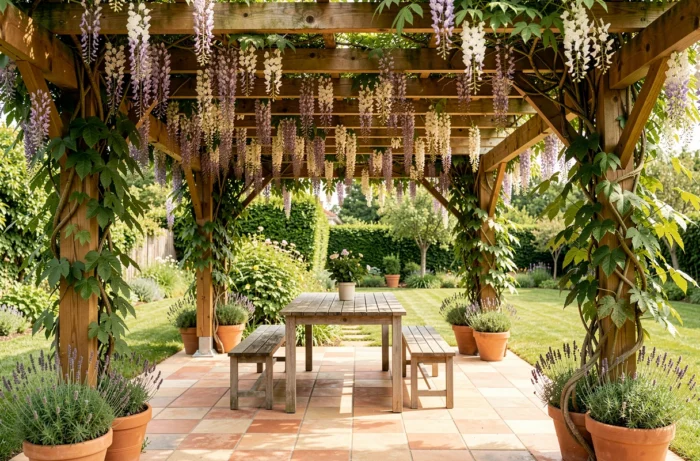
A pergola creates vertical volume where the garden remains horizontal. It delineates a dining or relaxation area, filters sunlight in summer, and serves as a support for climbing plants (wisteria, star jasmine, virgin vine).
Wood and aluminum are the two most common materials. Wood fits into a natural style, while aluminum suits contemporary lines. Size the structure according to actual use: a pergola that is too large for the available space overwhelms the garden instead of structuring it.
10. Collect rainwater for installation watering
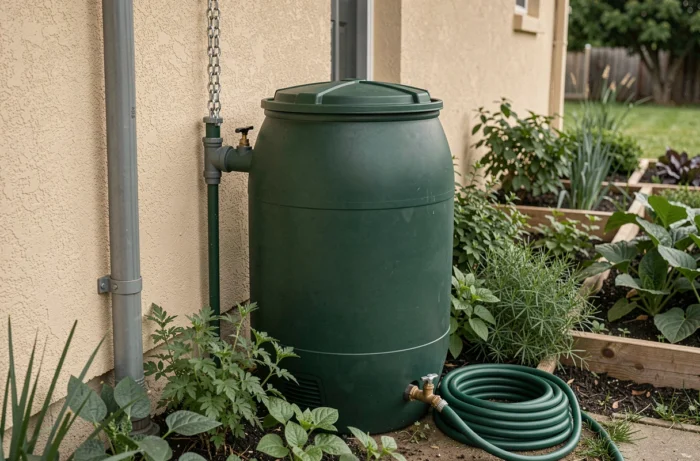
Even the most resilient plantings need water during their rooting phase, which usually lasts the first year. A rainwater collector connected to a gutter provides this resource without drawing from the mains.
There are models with varying capacities, from a small discreet barrel to an underground tank. The investment is modest, and the water autonomy for supplementary watering changes the game, especially when summer restrictions multiply.
- Place the collector near the main planting area to limit water transport
- Ensure that the chosen gutter drains a sufficient roof area
- Cover the tank to prevent mosquito proliferation
A well-designed garden is not one that accumulates decorative elements, but one where each choice responds to a real constraint of the land, climate, or use. Starting with soil, water, and exposure before thinking about furniture or lighting remains the most reliable method for achieving an outdoor space that lasts several seasons without constant maintenance.